
Dodge County Sex Offender Checks
The Georgia Bureau of Investigation registry page is the official starting point. GBI maintains the statewide system, while each sheriff registers and verifies people who reside, work, or attend school in that county. Select Dodge in the county field for a broad local list. Use a name when identity is known, or an address and radius when the question concerns a place.
No result is a safety finding. Spelling, address changes, search settings, and the timing of an agency update can affect results. The registry is updated daily, but Dodge County supplies the local facts. Compare the photograph, aliases, physical description, address, offense, and status before drawing a conclusion.
Dodge Sheriff Updates Registry Records
Georgia places the local verification role with the sheriff. Dodge County registration changes are sent to GBI, and the sheriff generally must transmit updates within two business days. The state system then refreshes daily. That chain explains why a recent change may not appear at once.
Suspected noncompliance should be reported to the Dodge County Sheriff's Office, not handled through confrontation. Give the name, location, date, and the specific fact that appears inconsistent. The sheriff decides whether investigation or correction is warranted.
Georgia Sex Offender Registry Searches
The Georgia Sex Offender Registry search offers both identity and place-based routes. Read and accept its conditions before using the search controls. A Dodge County filter is useful for a county-wide review, while a street address and radius answer a narrower proximity question.
The GBI registry landing page shown here links the public search, downloads, and governing information in one official place.
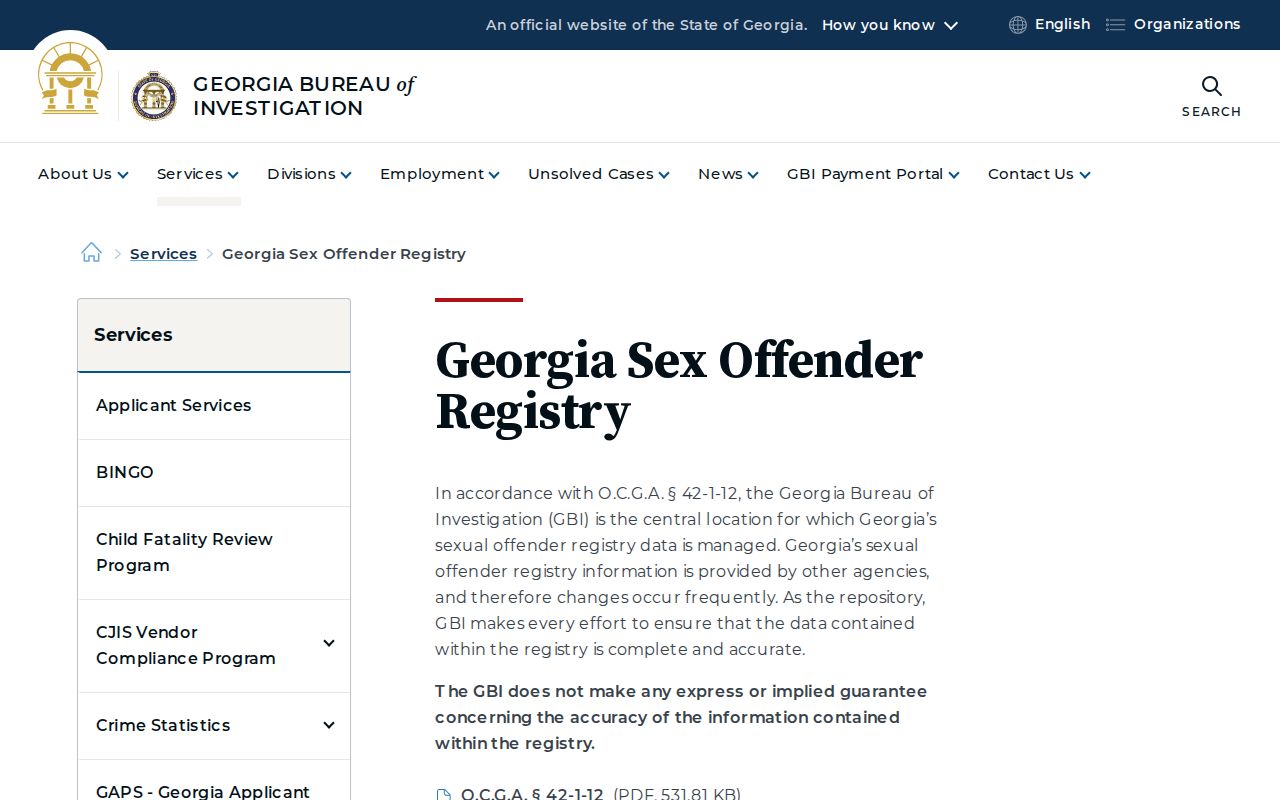
Starting there helps a reader avoid unofficial lists that may preserve stale copies.
- Open the official registry and accept its conditions of use.
- Choose a name search or a location search, then select Dodge County when useful.
- Compare the result list by photograph, aliases, age, and address.
- Open the profile and review offense, status, address, and verification details.
| Field Label | Type | Required | Notes |
|---|---|---|---|
| Offender name | Text | Optional mode | Use known spelling and check aliases. |
| County | Dropdown | Optional | Select Dodge for county results. |
| City or ZIP | Text | Optional | Narrows a place search. |
| Address | Text | Optional mode | Starts a proximity query. |
| Radius | Dropdown | Optional | Sets distance around the address. |
The official search interface displays the name and place controls used for a Dodge County registry query.
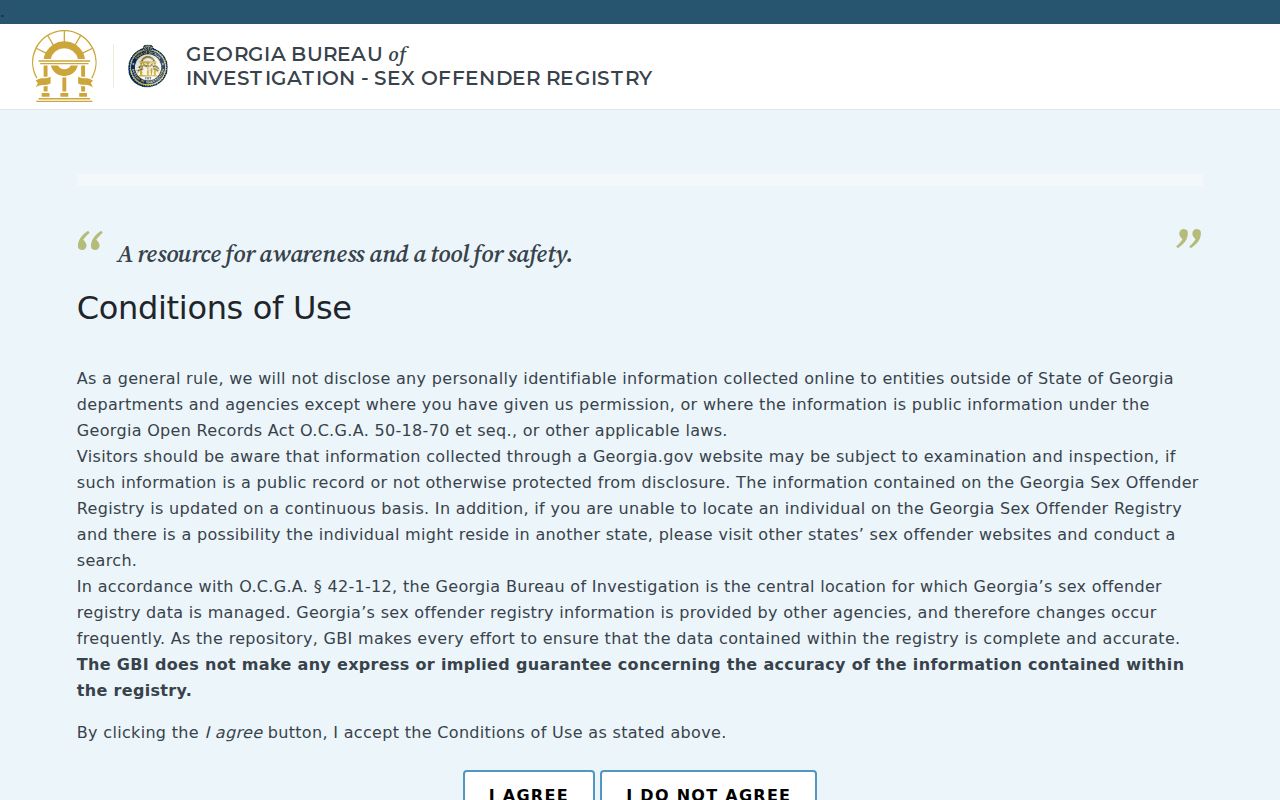
Search fields should be kept broad at first, then narrowed after candidate records appear.
Name and Address Searches Differ
A name search asks whether a known identity appears. It works best when the searcher can compare a birth year, alias, photograph, or physical description. Common names demand extra care. An address search asks who is registered near a place and depends on the location and radius entered.
Neither mode proves that every person at an address is listed or that a listed person is present at that moment. Registered address data has a specific legal purpose. Use it as one part of a practical safety plan, not as a substitute for current observation or emergency help.
Dodge Crime Data Needs Context
Registry totals and crime statistics answer different questions. A registry count reflects people subject to statutory registration rules, not the number of current offenses in Dodge County. For reported crime trends, use the FBI Crime Data Explorer and confirm the reporting agency, year, and participation status.
The official CDE interface shown below is a research tool, not a registry substitute.
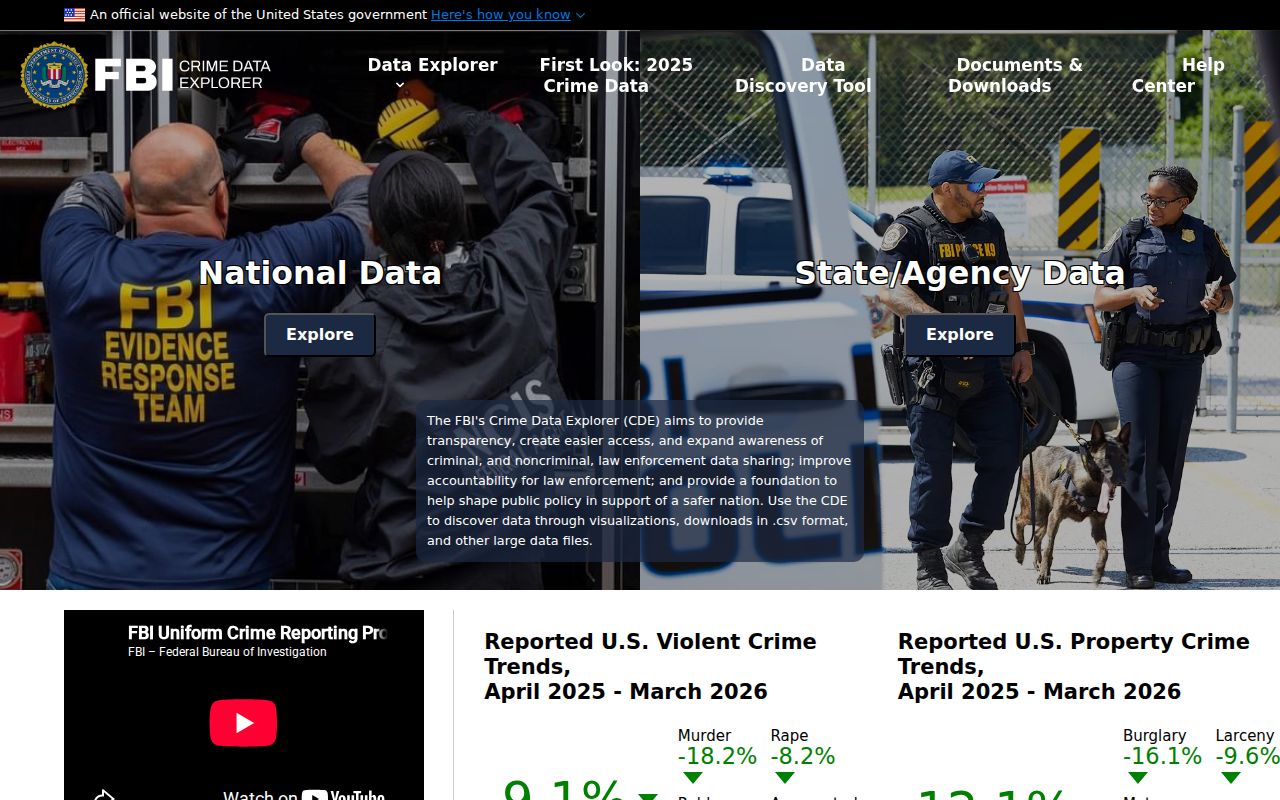
A blank or partial series does not mean zero crime. It may reflect agency participation or suppression rules.
Dodge Registry Profiles: What They Show
A public profile joins identity, location, offense, and registration fields. It is not a full criminal case file. The underlying Dodge court docket remains the source for pleadings, count-level outcomes, and later orders.
| Name and aliases | Primary name plus reported alternate names. |
|---|---|
| Photo and description | Image and physical traits used to distinguish identities. |
| Registered address | The residence or other public location field reported through the sheriff. |
| Offense | Qualifying offense and related jurisdiction details. |
| Classification | Level I, Level II, or sexually dangerous predator when assigned. |
| Status | Registration and compliance information shown by the public system. |
National Search Beyond Dodge County
The National Sex Offender Public Website searches participating jurisdictions through one federal interface. It is useful when a person has moved across state lines or when a location near the Dodge boundary matters. NSOPW does not replace the Georgia profile.
Open the source jurisdiction's record after finding a match. State pages supply the controlling status, update process, and local contact. A national search can broaden the geographic view, while the Georgia and Dodge channels provide the local detail.
The official national interface shown below demonstrates that cross-state layer.
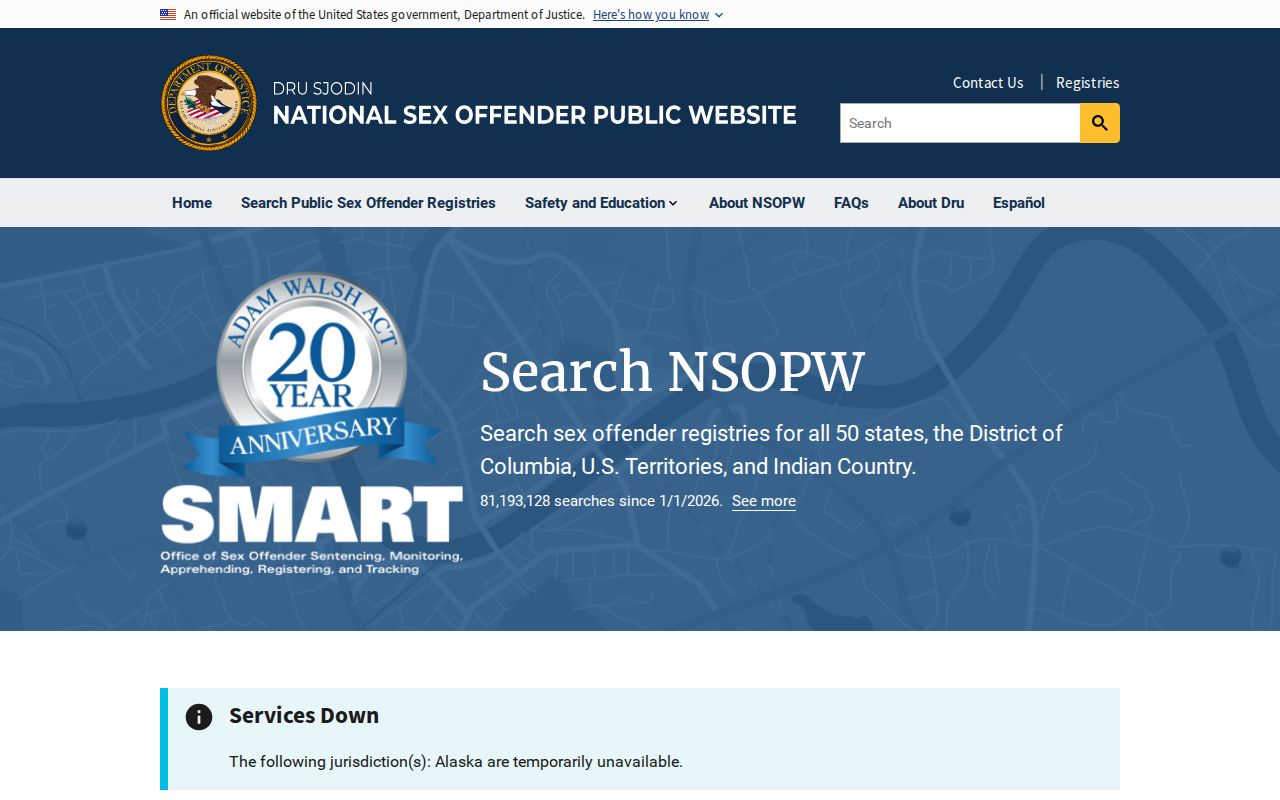
Use any national match to open and verify the originating state profile.
Registration Levels and Duties in Georgia
Georgia distinguishes Level I, Level II, and sexually dangerous predator classifications through its risk-review structure. A classification concerns assessed risk and statutory duties. It is not a new conviction. People generally report annually during their birthday month and must report specified changes within 72 hours.
| Level / Tier | Duration | Verification Frequency |
|---|---|---|
| Level I | Statutory registration period applies | Annual birthday renewal plus required changes |
| Level II | Statutory registration period applies | Annual birthday renewal plus required changes |
| Sexually dangerous predator | Subject to the controlling order and statute | Enhanced statutory supervision and reporting duties |
Dodge Registry Removal Petitions
Registration does not end merely because time has passed. Georgia law provides a petition route under O.C.G.A. §42-1-19 for some people who meet its conditions. The Superior Court process examines statutory eligibility and supporting records. It is distinct from correcting an address or status field.
A person considering relief should obtain the sentencing record, disposition, release and supervision facts, and classification material before filing. The Dodge County Superior Court clerk can explain filing practice but cannot give legal advice. Until a court grants relief and the registry is updated, existing duties remain in force.
Using Dodge Registry Information Lawfully
Public access supports personal, family, and community awareness. It does not authorize threats, harassment, vigilantism, or damage to property. Contact law enforcement when conduct creates an immediate risk, and use the sheriff's channel for a suspected registration violation.
Verify a possible match before acting on it. Compare the official photograph, aliases, physical traits, registered location, and status instead of relying on a shared name. The GBI warns that registry data can be incomplete or no longer current, even though the database refreshes each day. For a suspected Dodge County reporting breach, preserve the official profile link and note the date and observed discrepancy. Send that information to the sheriff. Do not visit the listed address, contact a listed person, post accusations, or treat a registry entry as proof of a new offense. Call 911 for an immediate threat; use the normal sheriff contact for a non-urgent compliance concern.
Misuse is unlawful: O.C.G.A. §42-1-12 warns that registry information may not be used to harass or threaten a registrant or that person's family. Report concerns to law enforcement.